Bronze vs Brass Memorial Plaques – The Traditional Choice
When choosing a memorial plaque, many families are drawn to traditional materials that feel timeless, dignified and made to last. Bronze and brass memorial plaques have both been used for generations and remain beautiful choices for memorial benches, churches, crematoriums, memorial gardens and other places of remembrance.
Although they may initially seem quite similar, there are some important differences between bronze and brass – particularly when it comes to appearance, price and ongoing maintenance.
In this guide, we compare bronze vs brass memorial plaques to help you decide which material is best for your memorial.
Why Choose a Traditional Metal Memorial Plaque?
Metal memorial plaques have a sense of permanence that makes them particularly suited to commemorating someone special.
Both bronze and brass can offer:
- A timeless, traditional appearance
- Excellent durability
- Beautiful, detailed lettering
- A substantial, premium feel
- A long service life
- Plenty of options for personalisation
However, the two metals age differently and require very different levels of care.
What is a Bronze Memorial Plaque?
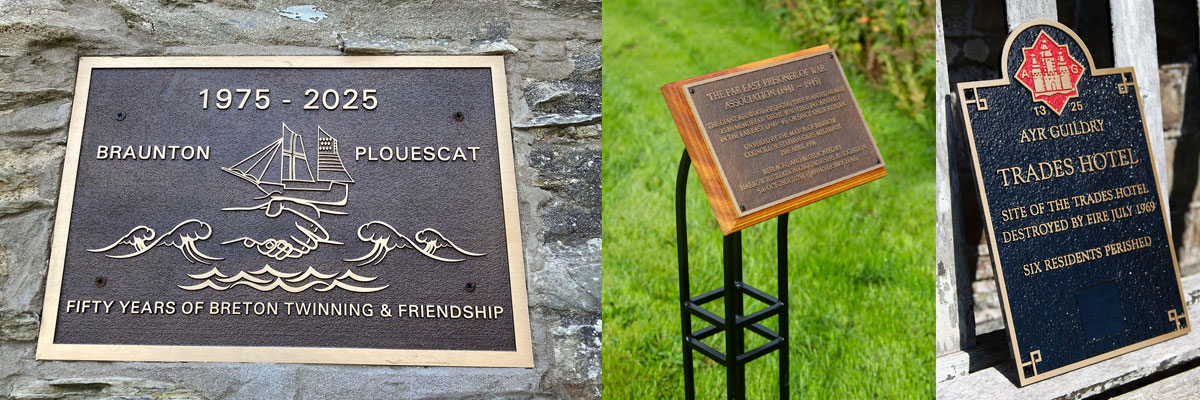
Bronze is traditionally an alloy primarily made from copper and tin. It has been used for statues, monuments and memorials for centuries thanks to its strength and ability to withstand outdoor conditions.
Cast bronze memorial plaques usually feature raised lettering and detailing, giving them a substantial and traditional appearance. They can also be produced with contrasting backgrounds, including classic black, dark green or blue, allowing the raised bronze lettering to stand out beautifully.
Bronze is particularly suitable for:
- Cemeteries and churchyards
- Crematoriums
- Memorial gardens
- Memorial benches
- Public memorials
- Gardens and private places of remembrance
One of the biggest advantages of bronze is the way it ages. Rather than needing to retain a highly polished surface, bronze naturally develops a patina over time. This gradual change in appearance adds to its character and is one of the reasons bronze has been used for outdoor monuments for generations.
Advantages of Bronze Memorial Plaques
- Extremely durable
- Excellent for outdoor use
- Traditional and prestigious appearance
- Relatively low maintenance
- Develops character as it ages
- Suitable for detailed lettering and designs
- Ideal for long-term memorials
The main consideration is price. Cast bronze memorial plaques are generally more expensive than brass, largely because of the specialist casting process involved in creating them.
What is a Brass Memorial Plaque?
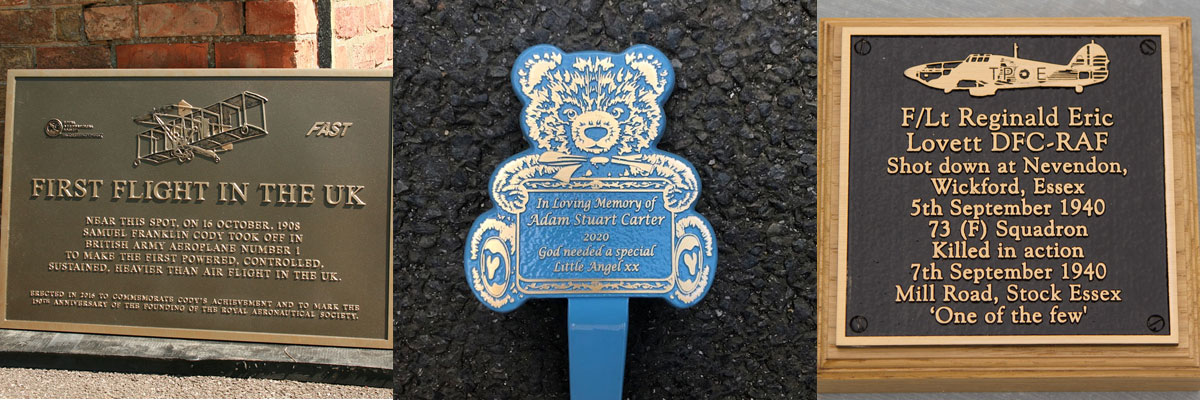
Brass is an alloy primarily made from copper and zinc. Its warm golden colour gives it a distinctive traditional appearance and it has long been used for memorial plaques and commemorative signs.
Brass memorial plaques are often engraved, producing crisp lettering and a clean, elegant finish. When newly polished, the bright golden surface can look particularly striking, especially when mounted onto timber or stone.
Another advantage of brass is its price. Brass memorial plaques are generally cheaper than cast bronze, making them an attractive option for families who would like a traditional metal memorial while working with a smaller budget.
However, there is an important consideration before choosing brass:
Brass requires very regular polishing if you want it to continue looking bright and golden.
When exposed to air, moisture and the weather, brass naturally begins to tarnish. Its polished surface will gradually become duller and darker if it isn’t maintained.
This is a completely natural characteristic of the material rather than a fault with the plaque.
For an outdoor brass memorial, polishing may be required several times throughout the year to keep it looking its best. Plaques in coastal or particularly exposed locations may require even more attention.
For families who are happy to carry out this regular maintenance, brass remains a beautiful and traditional choice. If ongoing maintenance is likely to be difficult, bronze may be the more practical option.
Is Bronze or Brass More Expensive?
Brass is generally the cheaper option, while cast bronze sits at the more premium end of traditional metal memorial plaques.
This makes brass a good choice if you love the appearance of a traditional metal plaque but need to keep the initial cost down.
Bronze costs more initially, partly because of the specialist manufacturing and casting process involved. In return, it provides exceptional durability and requires considerably less maintenance to retain an attractive appearance.
It can therefore be helpful to think beyond the initial purchase price.
Brass costs less initially but requires more ongoing care, while bronze costs more but is considerably lower maintenance.
Caring for Bronze and Brass Memorial Plaques
Maintenance is perhaps the most important practical difference between the two materials.
Caring for Bronze
Bronze requires relatively little maintenance. General dirt can usually be gently removed using water and a soft cloth, while its natural patina is considered part of the character of the material.
Harsh chemicals and abrasive cleaners should always be avoided.
Caring for Brass
Brass requires considerably more attention if you want to preserve its bright golden appearance.
Depending on the location, an outdoor brass plaque may need polishing several times throughout the year. Regular care helps remove tarnishing and restores the characteristic shine of polished brass.
If a memorial is somewhere you don’t visit regularly, it is worth considering whether you’ll realistically be able to maintain it before choosing brass.
Which is Best for an Outdoor Memorial?
Both materials can be used outdoors, but bronze is generally the more practical choice where minimal maintenance is important.
Its excellent durability and ability to develop an attractive natural patina make it particularly suited to memorials that will remain outdoors for many years.
Brass is also durable, but its appearance requires more work. Rain, moisture and exposure to the elements cause the surface to tarnish, meaning regular polishing is necessary if you want to retain the bright golden finish.
This is particularly important for memorials in exposed or coastal locations, where brass may require more frequent care.
Bronze or Brass for a Memorial Bench?
Both materials are popular choices for memorial bench plaques.
Brass looks particularly attractive against timber when freshly polished, with its golden colour creating a beautiful contrast. It is also the more affordable option.
However, a memorial bench naturally exposes the plaque to changing weather conditions, so regular polishing will be required to keep brass looking bright.
Bronze offers a different appearance but can be a more practical choice for benches in public parks, cemeteries, woodland or locations that aren’t visited frequently.
Personalising a Bronze or Brass Memorial Plaque
Both materials can be personalised to create a unique tribute.
Depending on the style and manufacturing process, your memorial could incorporate:
- Names and dates
- Personal inscriptions
- Meaningful quotations
- Decorative borders
- Flowers or foliage
- Religious symbols
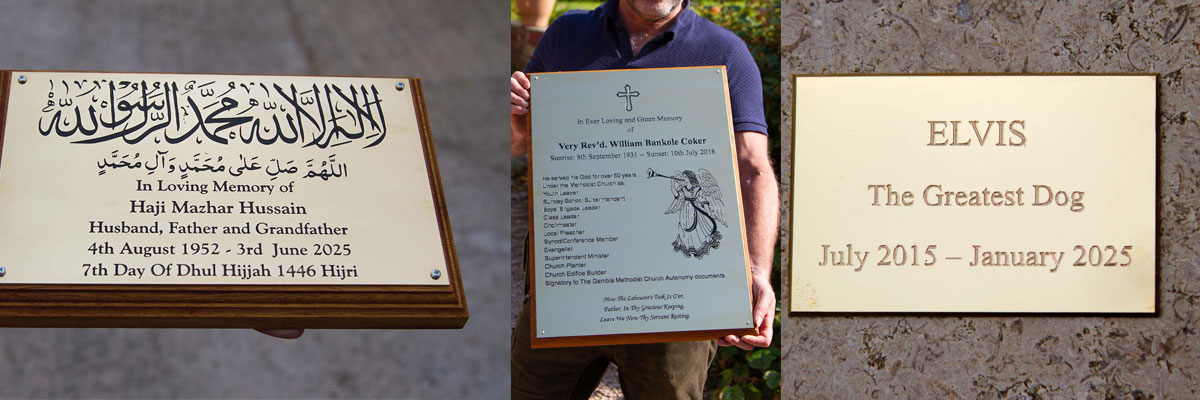
- Images and motifs
- Club, military or organisational emblems
The wording and design are just as important as the material itself, helping to create a memorial that feels truly personal to the individual being remembered.
Bronze vs Brass – Which Should You Choose?
The right choice depends on your budget, preferred appearance, location and how much ongoing maintenance you’re comfortable with.
Choose bronze if you want a premium, traditional memorial with exceptional outdoor durability and relatively little ongoing maintenance. It costs more initially, but it is an excellent option for a long-lasting memorial that can age naturally.
Choose brass if you’re looking for a more affordable traditional metal memorial and particularly love its warm, polished golden appearance. Just remember that regular polishing will be necessary throughout the plaque’s lifetime if you want to maintain that bright finish.
For many families, this is the simplest way to think about the difference:
Brass is cheaper but requires considerably more maintenance. Bronze is more expensive but offers a lower-maintenance, premium finish.
Understanding this before ordering will help you choose a memorial that not only looks beautiful when it arrives but remains suitable for you and its location for many years to come.
A Traditional and Lasting Tribute
Bronze and brass have both been associated with memorials and commemorative plaques for generations, and each has its own appeal.
For those looking for a lower-maintenance traditional metal memorial, cast bronze is an excellent choice. For those who love the unmistakable warmth and shine of polished metal, don’t mind regular maintenance and are looking for a more affordable option, brass remains a beautiful traditional choice.
Whichever material you choose, a thoughtfully designed memorial plaque can create a lasting place to remember someone special for many years to come.
Frequently Asked Questions
Is bronze better than brass for an outdoor memorial?
Bronze is generally the more practical option when low maintenance is important. It is extremely durable and naturally develops a patina as it ages.
Is brass cheaper than bronze?
Yes. Brass memorial plaques are generally more affordable than cast bronze plaques, making brass a popular option for those wanting a traditional metal memorial at a lower initial cost.
How often does a brass memorial plaque need polishing?
This depends on its location and exposure to the elements, but an outdoor brass plaque may require polishing several times throughout the year to maintain its bright golden appearance.
What happens if I don’t polish a brass memorial plaque?
Brass naturally tarnishes when exposed to air and moisture. If it isn’t regularly polished, its bright golden surface will gradually become duller and darker. This is a natural characteristic of brass rather than a fault with the plaque.